Pre-order the poster Land Mammals in Late Pleistocene Europe
Did you know that not too long time ago there were hyenas, hippos, giant sea otters and at least four species of rhinos in Europe? Now you do!
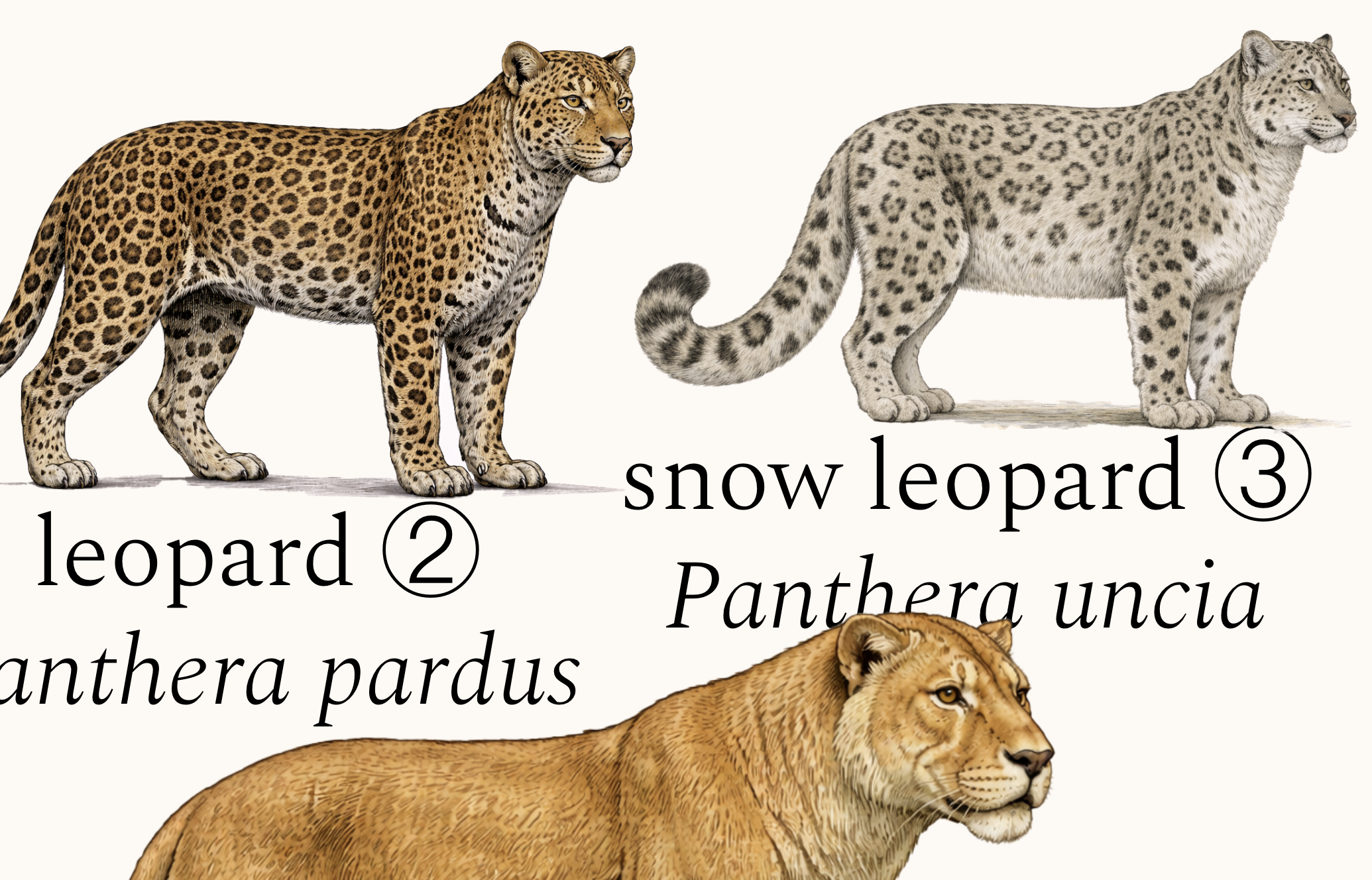
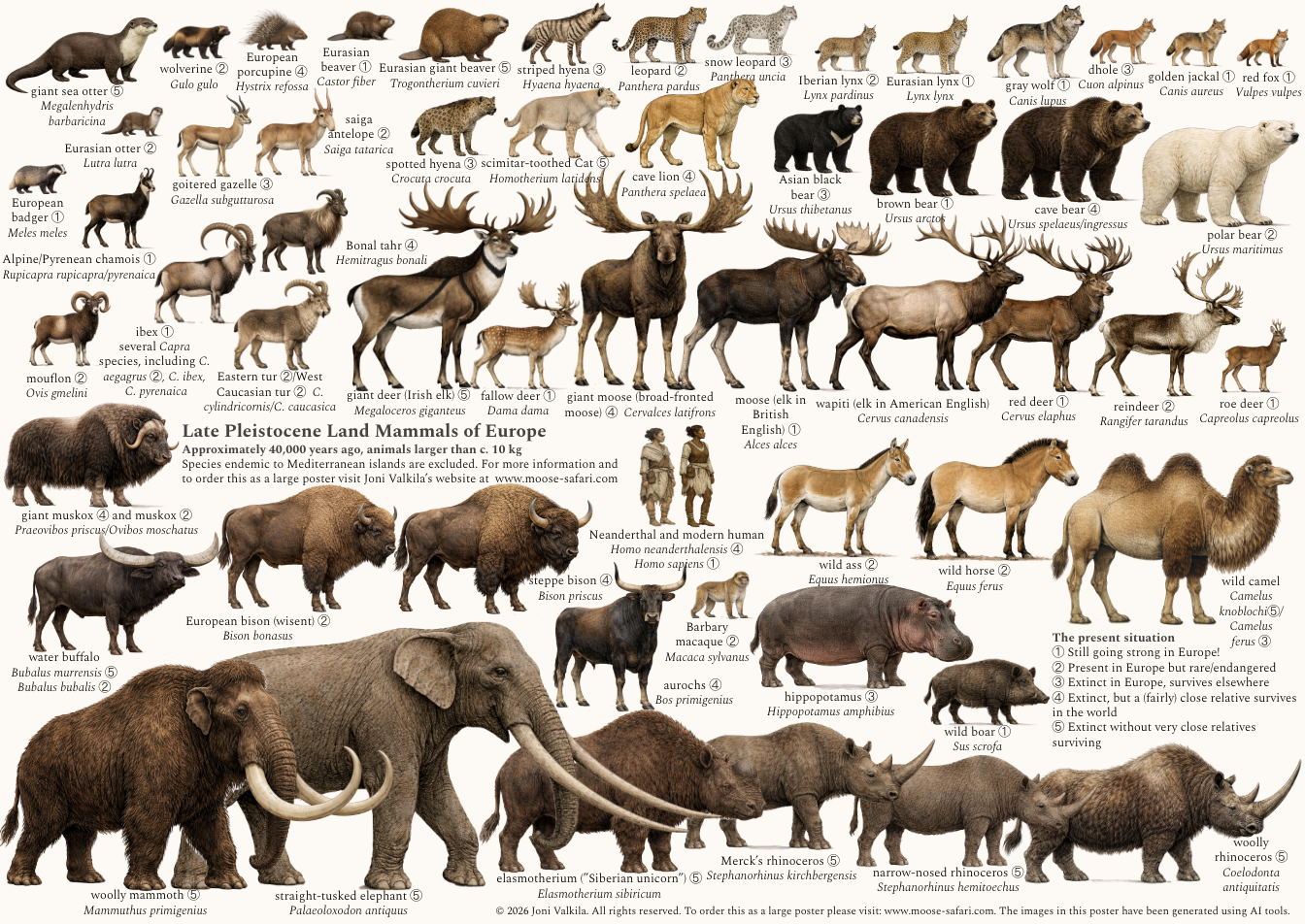
The Late Pleistocene Land Mammals of Europe poster presents the large land mammals of Europe—species weighing over approximately 10 kilograms—as they lived around 40,000 years ago. This period marks a crucial moment in human and natural history: modern humans (Homo sapiens) had already arrived in Europe, yet the continent still supported an extraordinary diversity of large wild animals.
This poster helps you learn about:
Ice Age and Late Pleistocene mammals of Europe
Extinct and extant European fauna
Scientific and English names of large mammals
Relative animal sizes compared to each other
Human–wildlife coexistence before large-scale extinctions
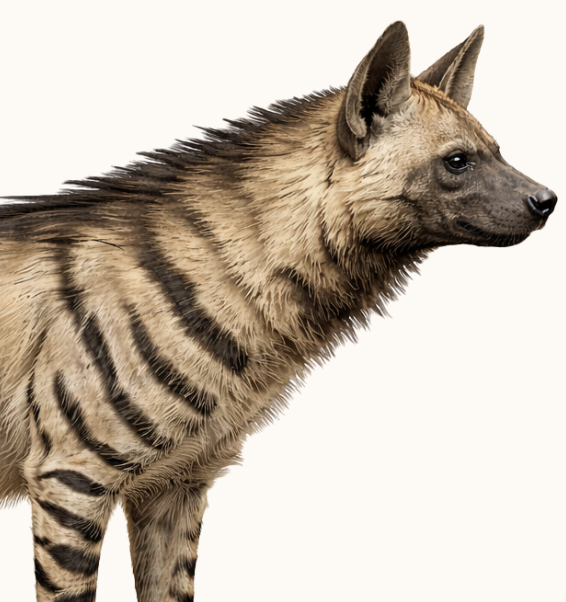
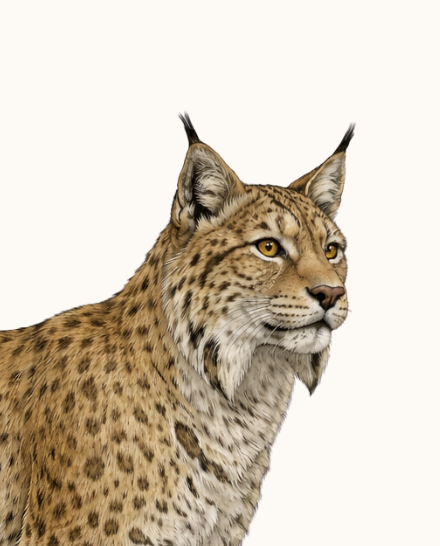
The poster includes both extinct species, such as woolly mammoths, straight-tusked elephants, cave bears, and woolly rhinoceroses, and animals that still survive today, allowing direct comparison between past and present European wildlife.
Europe experienced a very cold climate at the time when many of these species became rare. These species had survived multiple ice ages and climate shifts before disappearing shortly after the spread of modern humans across Europe. The same pattern occurred on every continent and island our species reached: the largest animals vanished first, followed by smaller ones. Extinctions continued even as climates later became warmer and more favorable for many animals.
This strongly suggests that expanding human activity—hunting (often with dogs), improved traps and weapons, and the large-scale conversion of wild landscapes for human use—played a decisive role in the loss of wildlife which is still on-going.
Why this poster matters today
For thousands of years, people carved and painted large mammals on rocks and the walls of caves around the world. By hanging this poster on your wall, you can continue that fine tradition in your very own cave.
Every school, natural history museum, and zoo could benefit from a poster like this. It helps both children and adults understand what once existed on this planet—and what was lost. If you work in education, a museum, or a zoo, you can help make this knowledge more widely available.
The poster can also carry a message of hope. In many parts of Europe, rural areas are becoming emptier due to urbanisation, changes in agriculture and declining populations. This creates new opportunities for large-scale wildlife recovery. In some regions, this comeback is already underway—and it may accelerate in the future.
About the images:
The illustrations in this poster have been generated using AI tools. I believe the images are beautiful and well suited for this purpose. Making the poster required considerable human effort too—research, selection of species, comparison of sizes, and composition. I am also thankful for help I received from a number of people who commented earlier versions of this poster.
What comes next
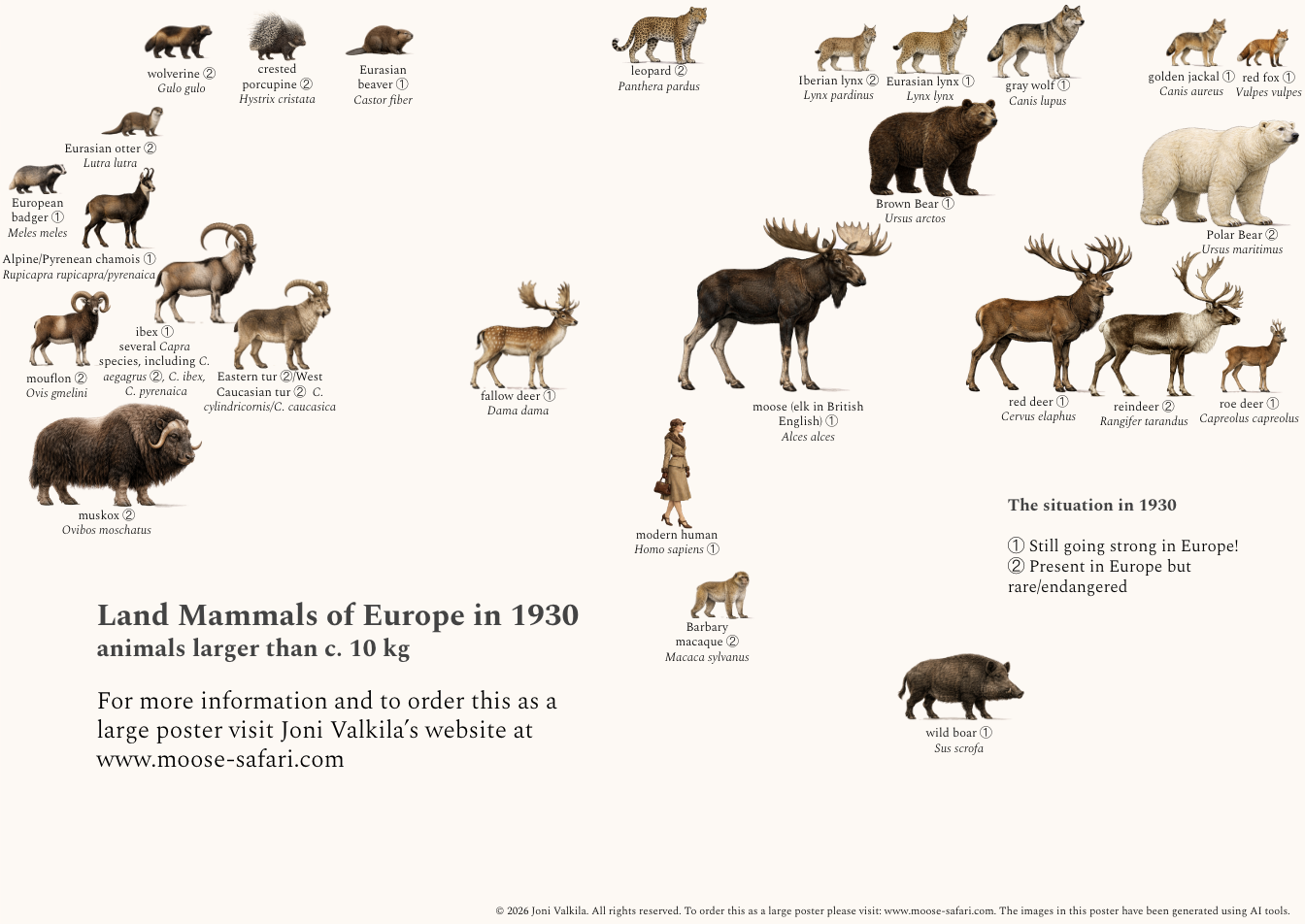
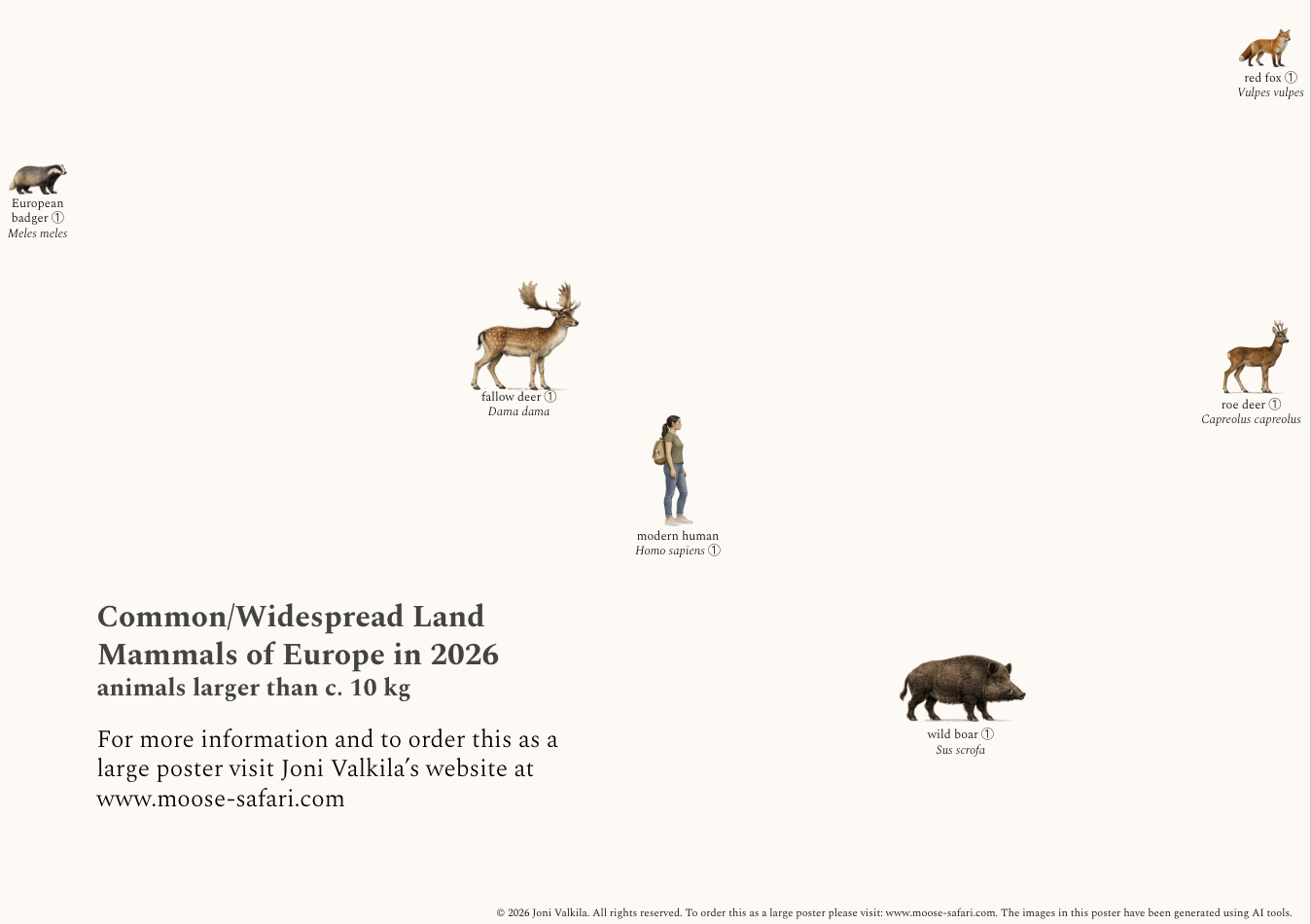
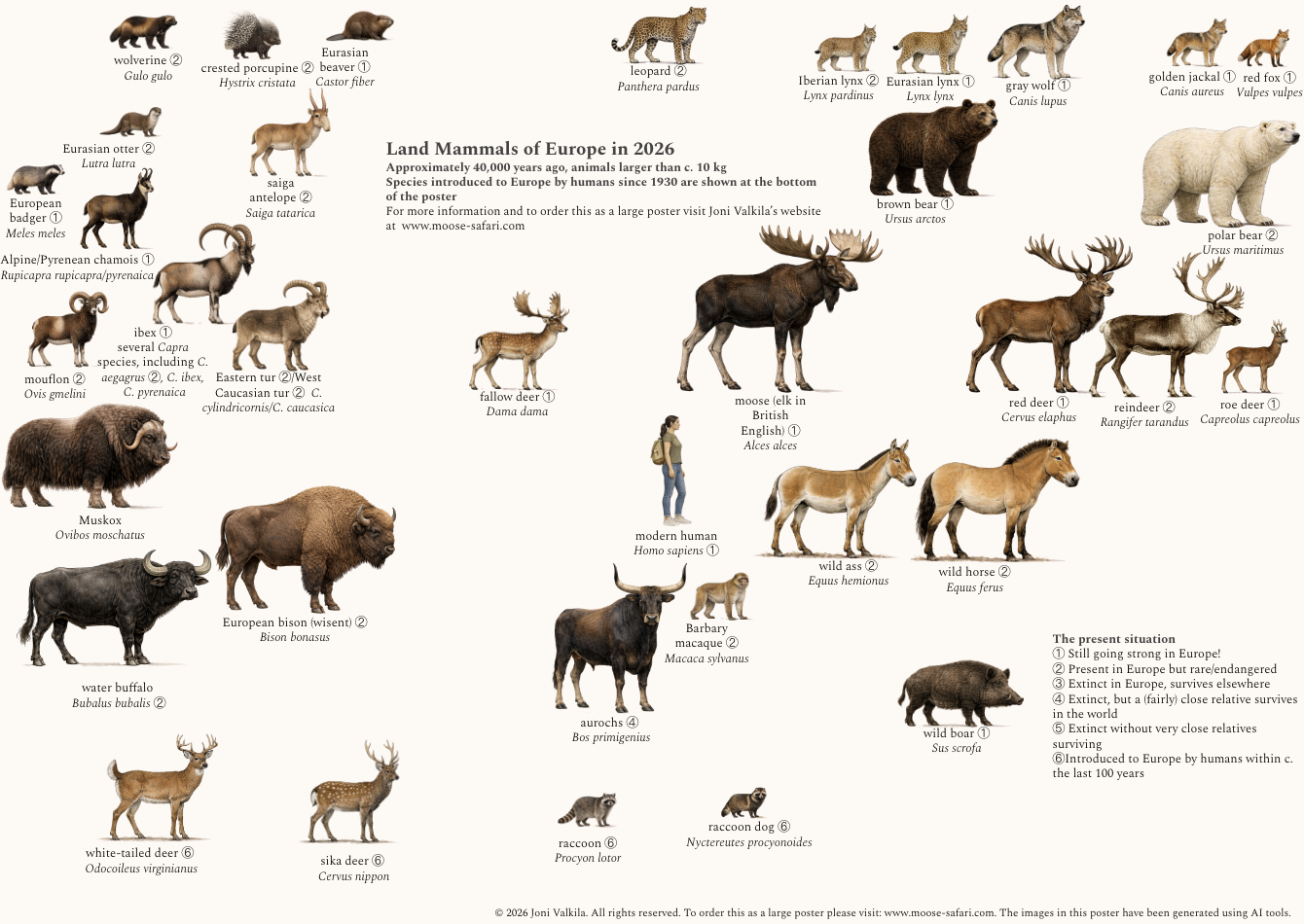
This project is still evolving, and I will continue improving this poster. Future versions may include additional languages and improved images. If you have ideas for this or other posters, I’d be very happy to hear them. If you scroll down you can see more versions of wildlife in Europe posters including land mammals of Europe today.
Interested in pre-ordering?
If you’d like to order this poster, please leave your contact information below. I’ll get back to you with more details once ordering opens. You are not committing to anything, just letting me keep you posted.
GDPR
Your contact information will not be shared with third parties, and you will not receive spam or repeated messages.
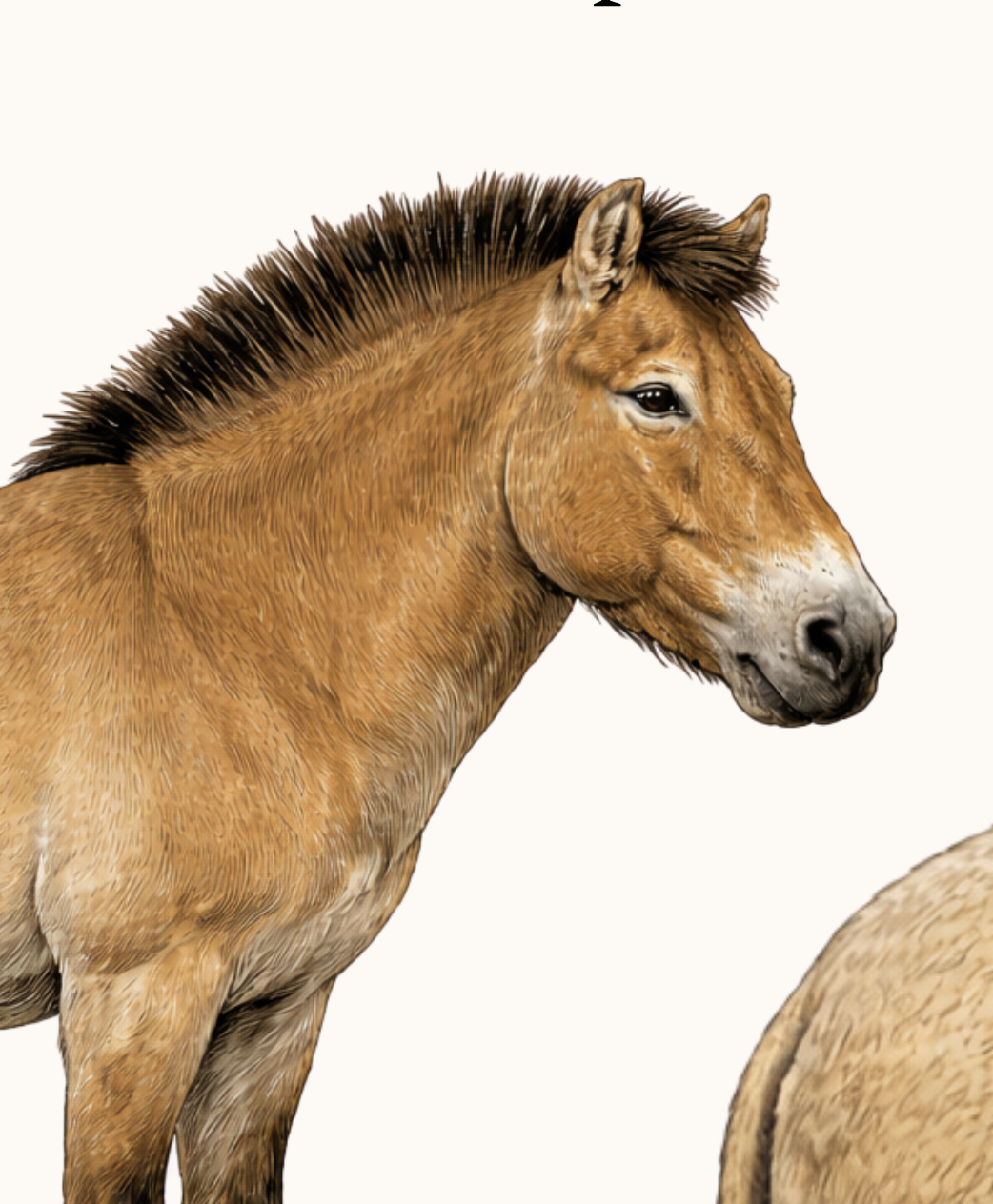
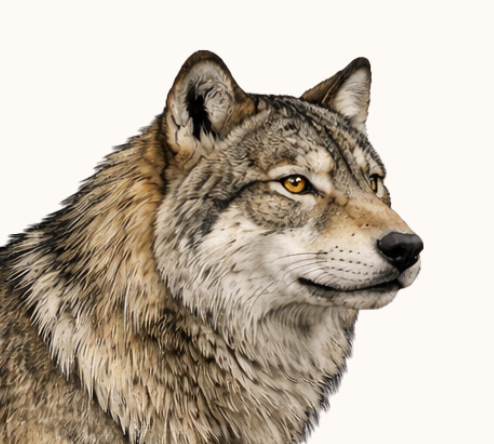
Zoom in to see the level of detail in the poster.
The Land Mammals of Europe posters encourage reflection on how Europe’s land mammals have changed in the past, their present distribution, and possible future developments.